Product Innov‑Design Tech

Kyomori-Ka is dedicated to pushing the boundaries of technological innovation. Our product development employs a multidisciplinary approach—integrating materials science, electrical engineering, mechanical design, and data analysis—to create connectors that set new benchmarks for performance, reliability, and durability.
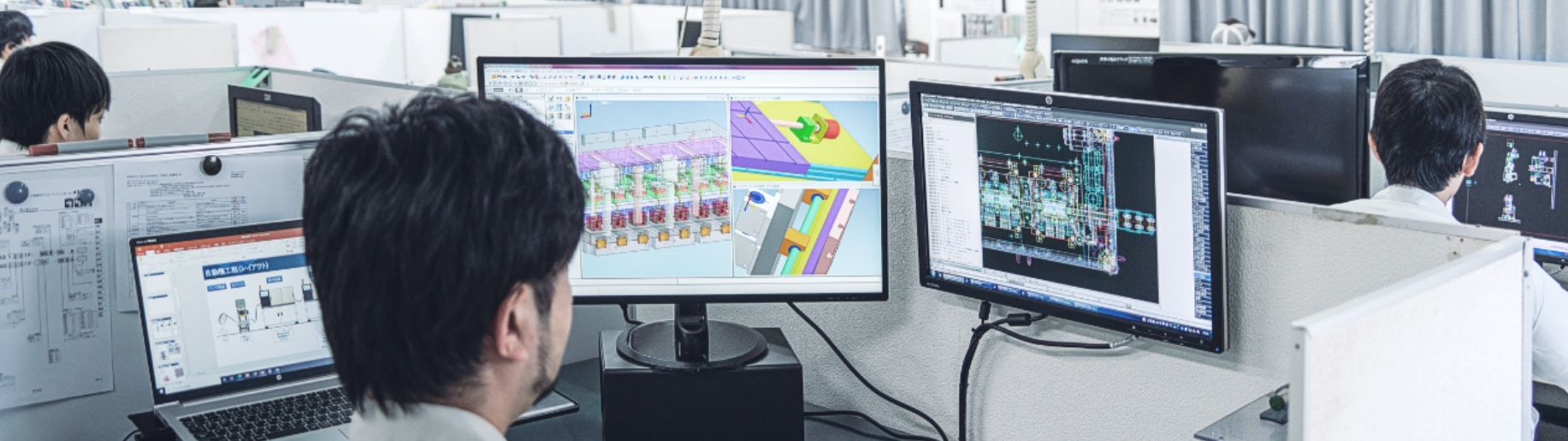
By leveraging advanced simulation tools and rapid prototyping technologies, we accelerate the development process, enabling swift iteration and design optimization to meet evolving market demands while upholding the highest quality standards.
We place a strong emphasis on the application of advanced materials, utilizing cutting-edge substances to ensure our connectors deliver superior performance, withstand harsh environments, and maintain optimal signal integrity. We invest heavily in R&D and collaborate closely with partners, universities, and industry experts to maintain our technological leadership.
We will continue to leverage our multidisciplinary expertise, advanced materials, and agile development processes to deliver connector products that exceed customer expectations. By embracing emerging technologies and collaborating with industry partners, we are committed to shaping a connected future and driving progress across global industries.


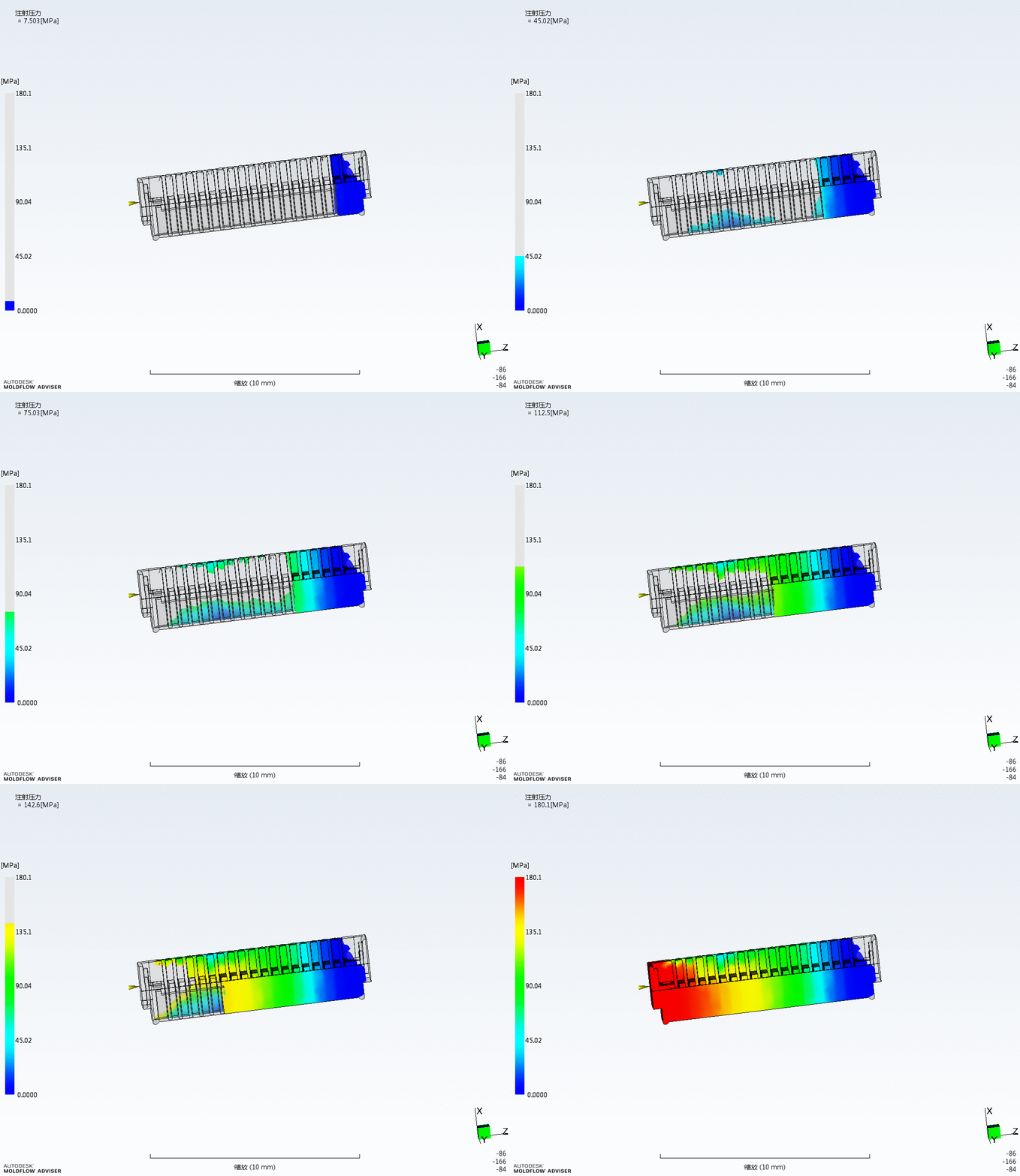
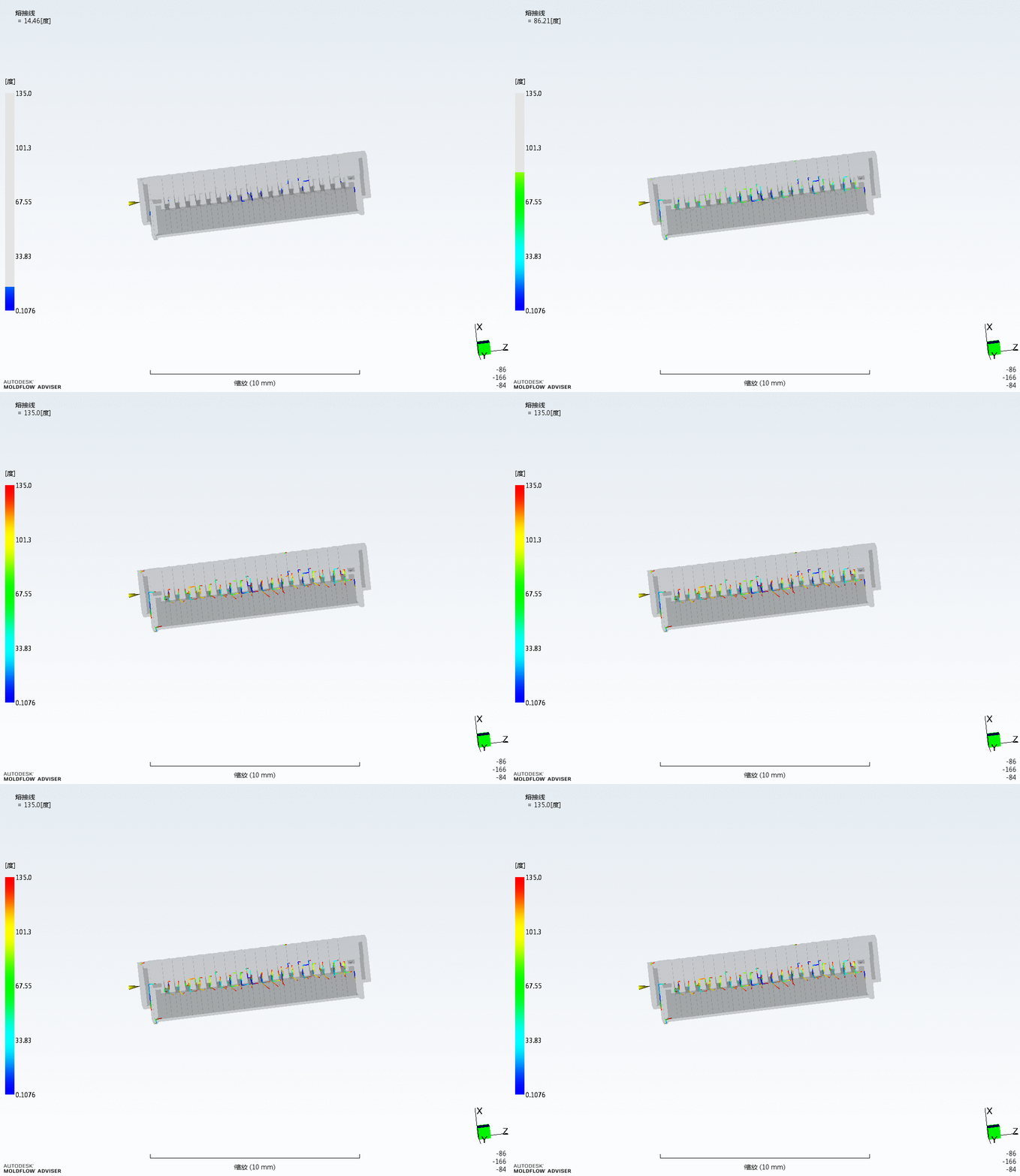
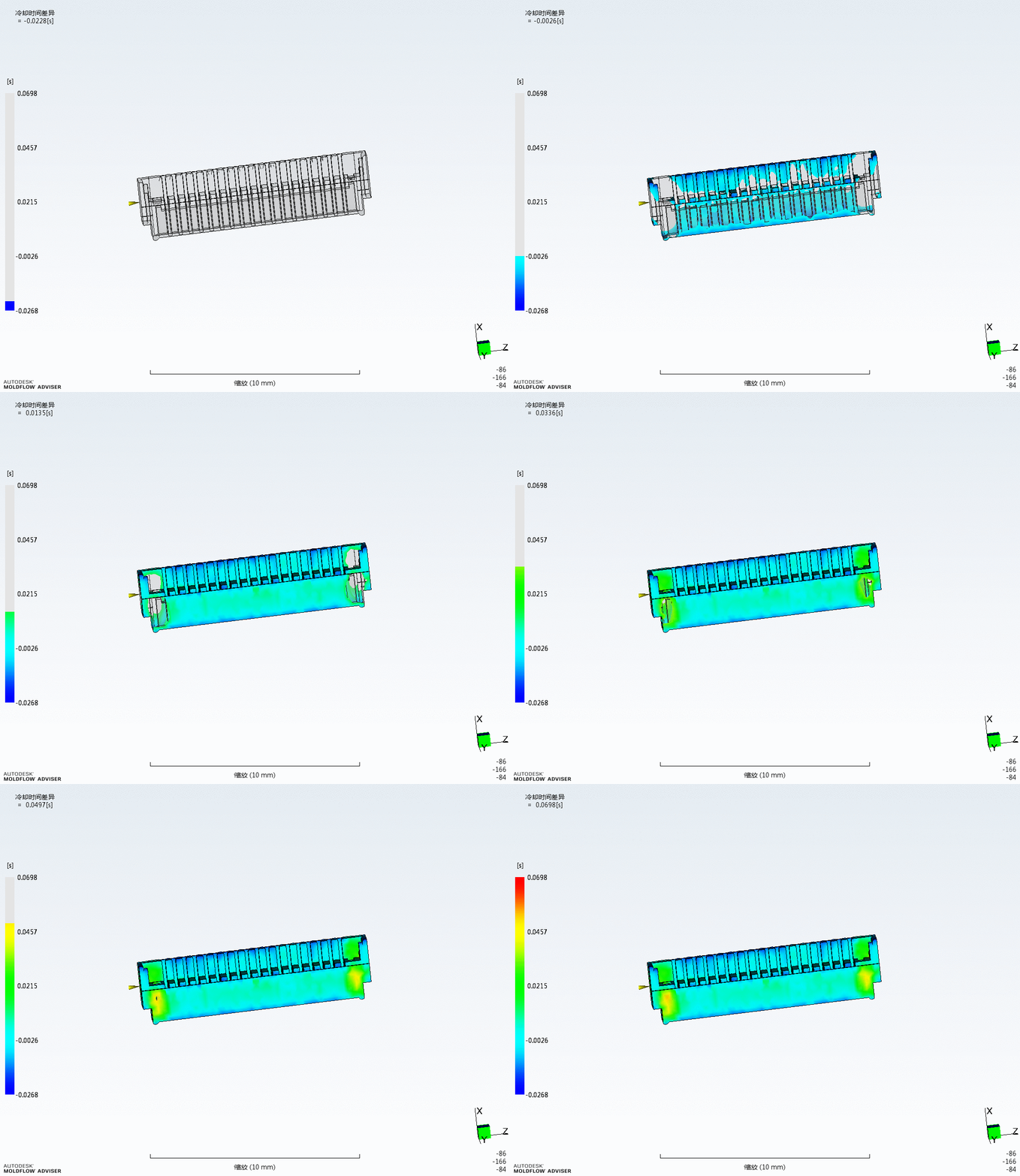
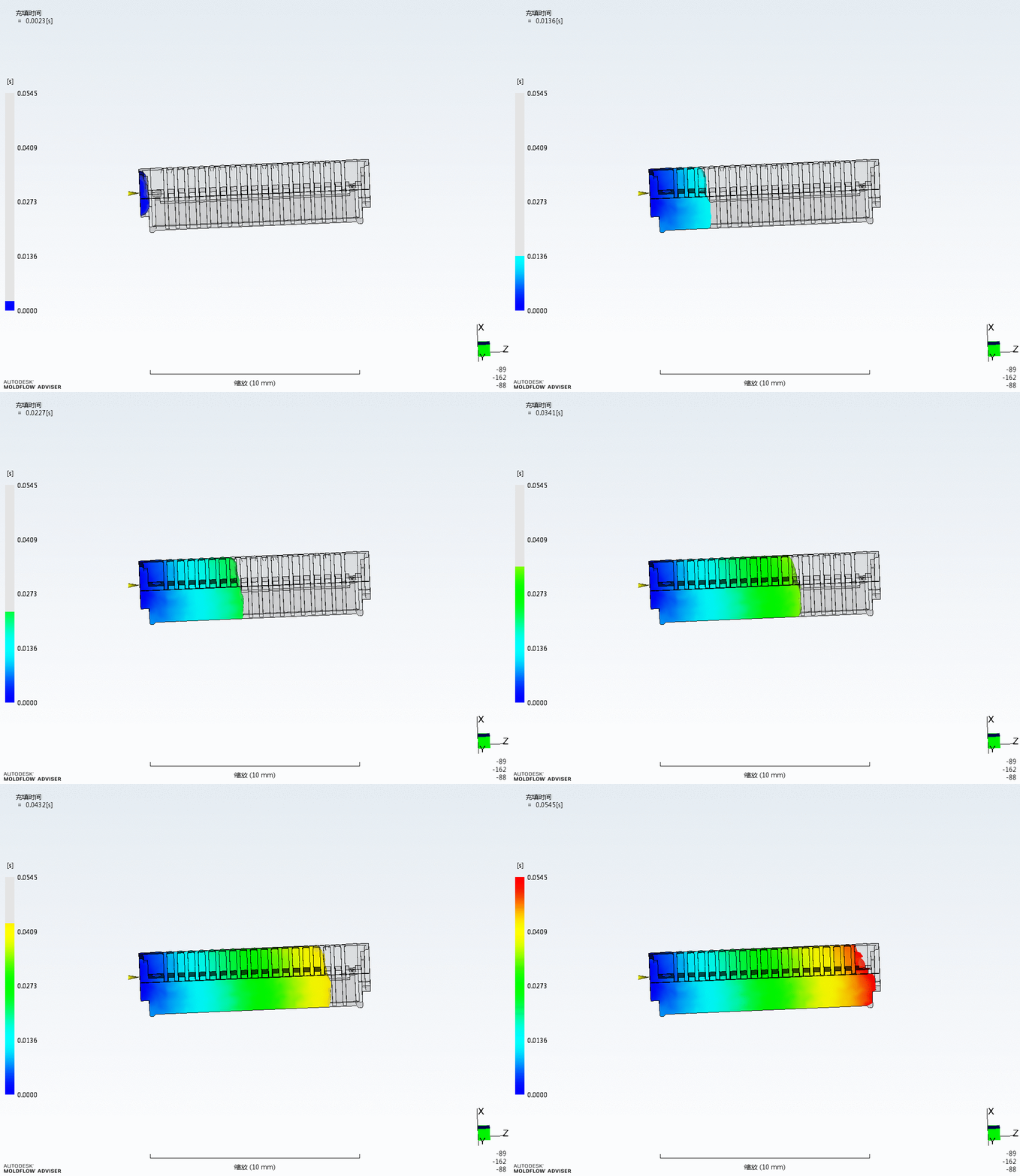
Analysis of Resin Flowability for Precision Connector Products

Through moldflow's accurate mold flow analysis results, you can understand the flow behavior of plastic in the mold and identify potential problems before actual manufacturing, thereby improving product quality and saving mold trial costs and research and development time.


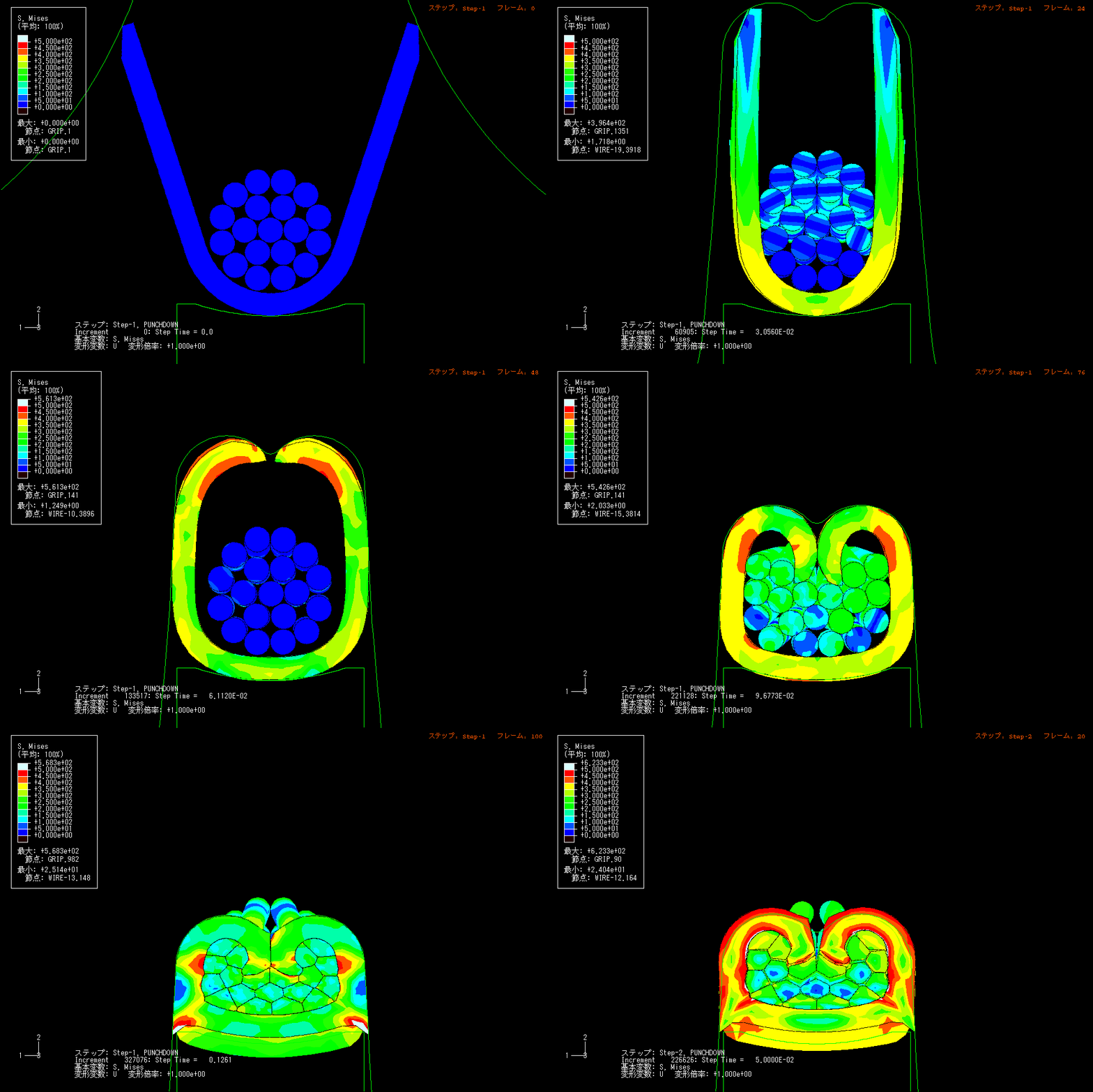
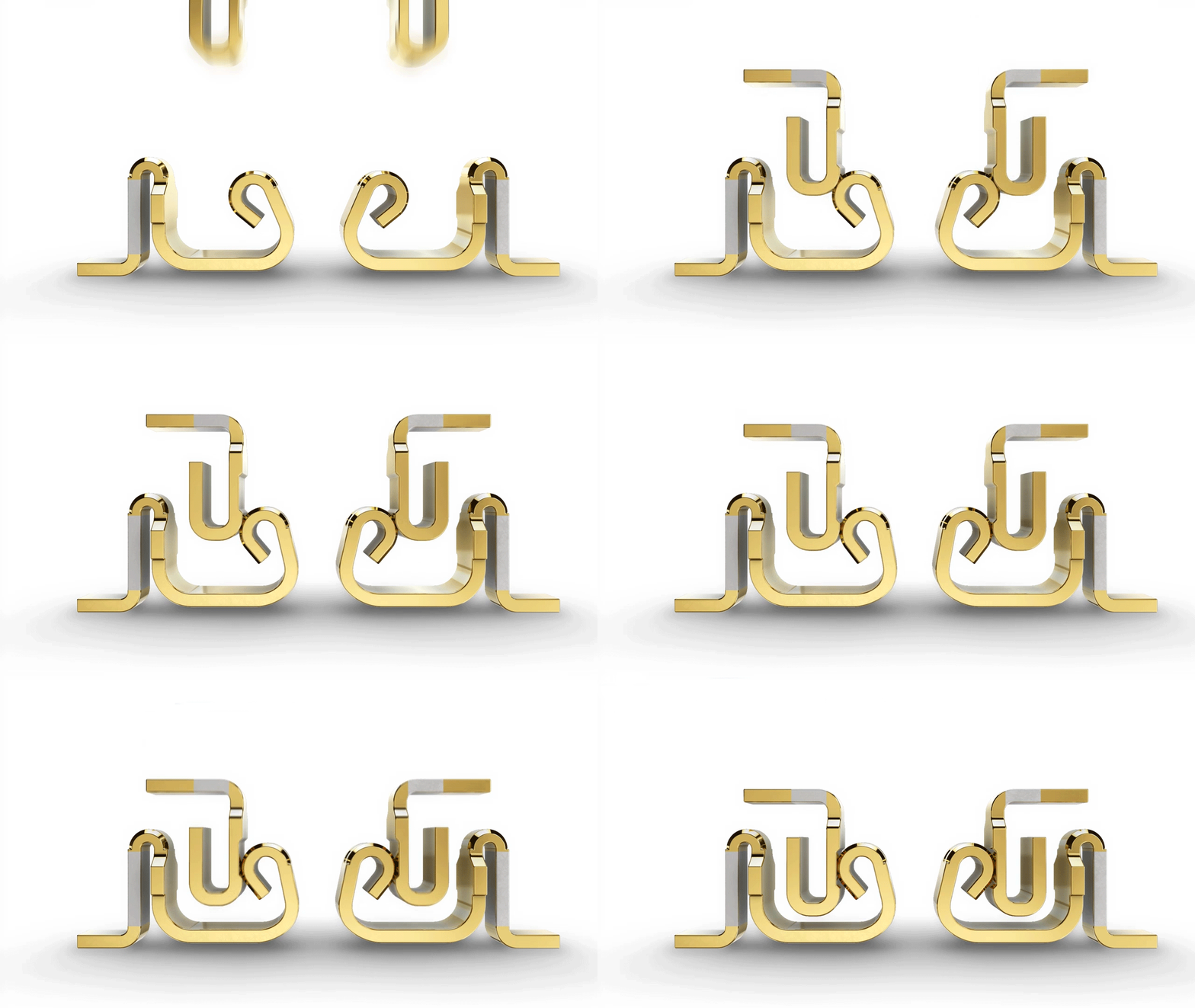
Terminal Stress & Fitting Simulation Analysis of Precision Connectors

Stress Analysis of Precision Connector Terminals
Simulation Analysis of Mating for Board-to-Board Connector Terminals


Electrical Signal Crosstalk & Radiation Simulation Analysis of Precision Connectors

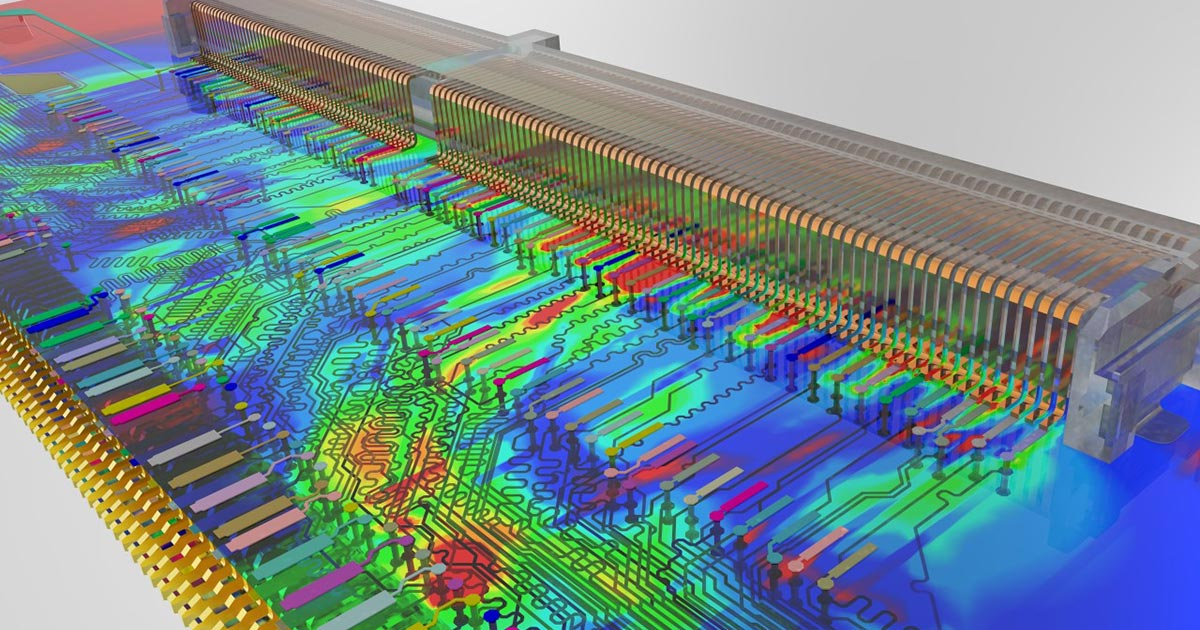
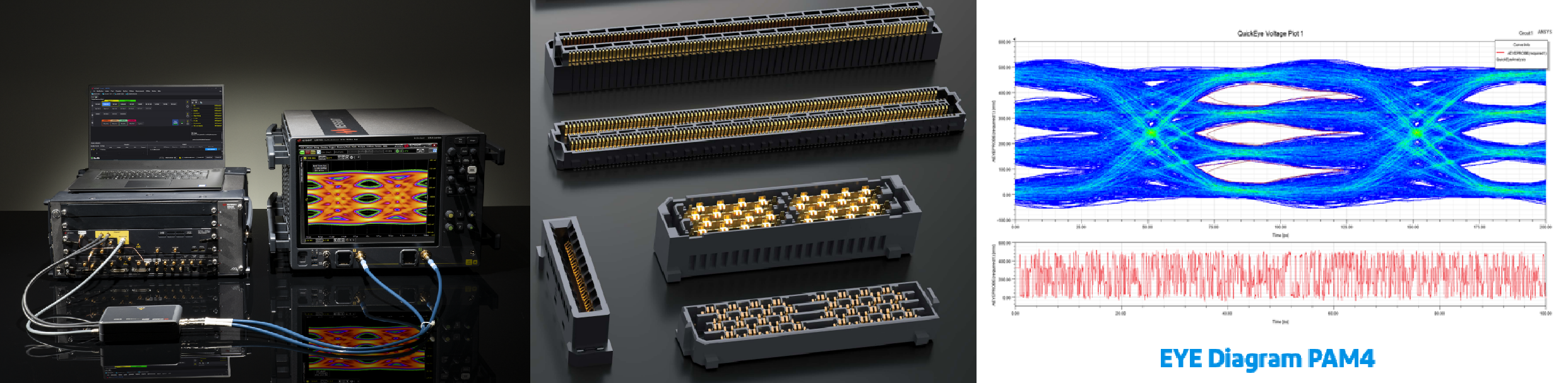
Signal Integrity (SI) analysis products for connectors are essential for designing high-speed serial channels, parallel buses, and comprehensive power delivery systems in modern high-speed electronic devices. These tools, which integrate electromagnetics (EM) and circuit simulation, enable the prediction of EMI/EMC, power integrity, and SI issues, thereby optimizing system performance prior to physical construction and testing. A leader in the development of high-frequency and high-speed connectors, Kyomori-Ka produces a wide range of ultra-precision connectors that deliver superior signal integrity solutions. During the development process, the company utilizes 3D electromagnetic simulation tools—such as CST STUDIO and HFSS—to verify compliance with requirements for millimeter-wave and ultra-high-speed transmission, and provides various simulation data tailored to customer specifications.
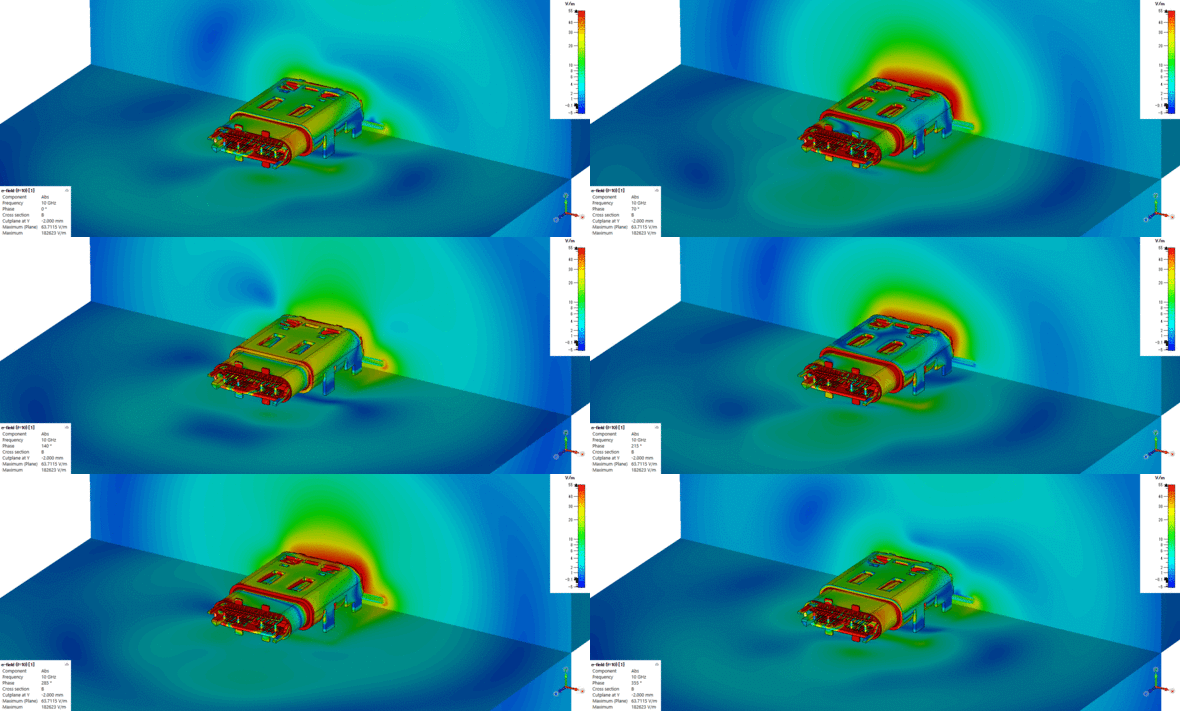


*3D Electromagnetic Field Simulation

Precise 3D models containing high-frequency connector data can be provided. Furthermore, the connector's shielding performance is verified by observing the spatial propagation and distribution of the magnetic field, enabling an understanding of near-field and far-field EMC conditions during the early stages of electronic product development.

*2D/2.5D Electromagnetic Field Analysis

The example presents a connector and PCB layout that comply with transmission standards. By considering the installed components and the effects of signal trace reflections and crosstalk noise, the design achieves both standards compliance and an optimized PCB layout around the connector. Furthermore, by integrating the overall PCB layout and verifying the identification and mitigation of power supply noise, it is possible to precisely analyze the power-to-ground impedance and the distribution of electric field strength.

By importing PCB CAD data, the entire PCB—including net and component information—can be analyzed, and the characteristics of connector solder joints can be reproduced.

PCB CAD Tools:
*OrCAD (INNOTECH Corp.)
・PCB design
・Conversion of PCB CAD data into analysis models

*SIwave (ANSYS Inc.)
ADS (Keysight Technologies, Inc.)


*System Analysis
SIwave and ADS combine all elements between components into a single transmission circuit, ensuring the analysis results capture the characteristics of the entire system. This enables the verification of transmission characteristics—including the effects of equalization, noise, and jitter—across any data rate.


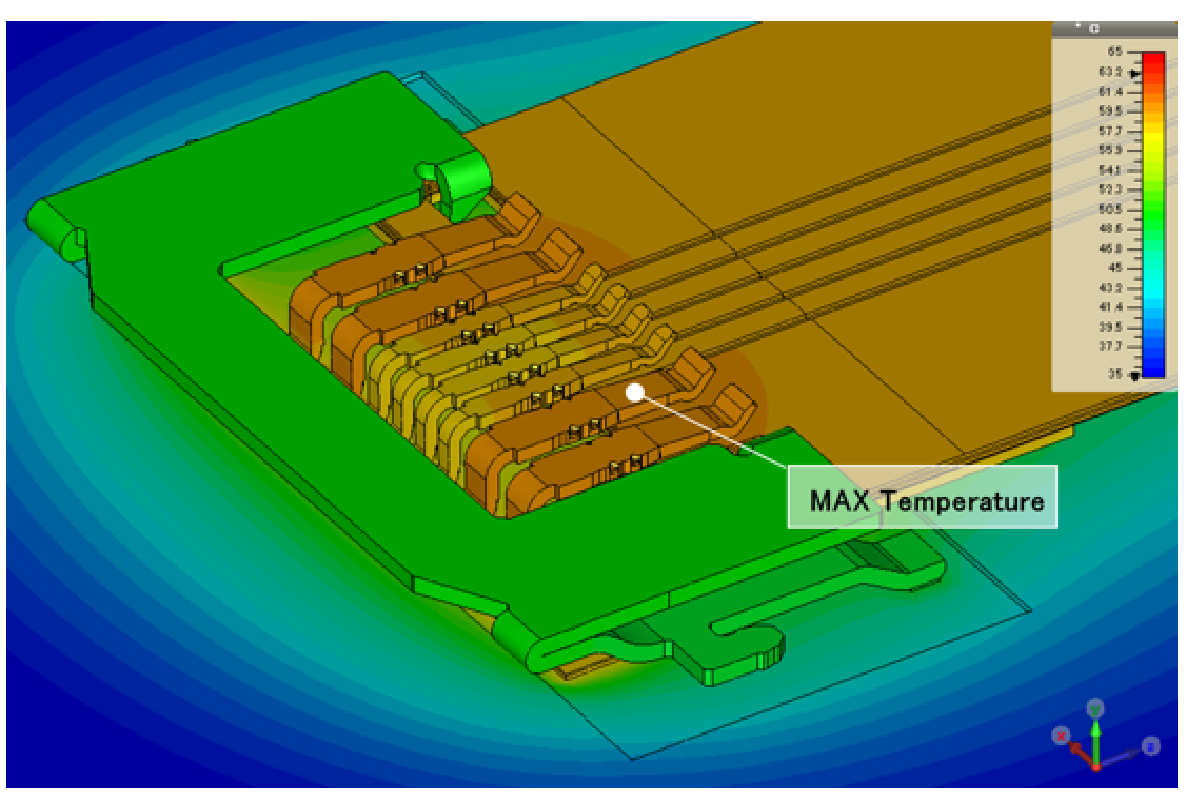
*Thermal Design
The effectiveness of heat sinks and thermal paths is verified by monitoring temperature rise during current flow.

Signal Integrity Analysis of High-Speed ​​Communication Connector Terminals

Kyomori-Ka applies system-level signal integrity expertise to every high-speed product to ensure optimal connector performance. At Kyomori-Ka, the design process begins with signal integrity. Prior to production, signal integrity engineers utilize advanced 3D tools to accurately model connector and via-field performance. Our backplane series is designed to meet the demands of high-performance, high-bandwidth systems. Kyomori-Ka’s innovative designs support data transmission speeds of 56 Gbps and offer scalability up to 112 Gbps, enabling efficient system upgrades without the high costs associated with redesigning backplanes or midplanes. The product series features ultra-low noise, low insertion loss, and minimal skew, providing design flexibility and ample design margin. Additionally, the connector footprint suppresses crosstalk, while the overall design incorporates the latest Eye-of-Needle (EON) technology. Backplane connector cable assemblies further reduce insertion loss, thereby increasing channel margin and enabling more creative architectural designs. These products support 224 Gbps PAM-4, with future expansion planned for 112 Gbps NRZ and 224 Gbps PAM-4. Every step of our manufacturing process includes rigorous electrical testing and visual inspections to ensure we deliver the highest quality products.

Evaluation and Testing of Solderability for Connector Terminals

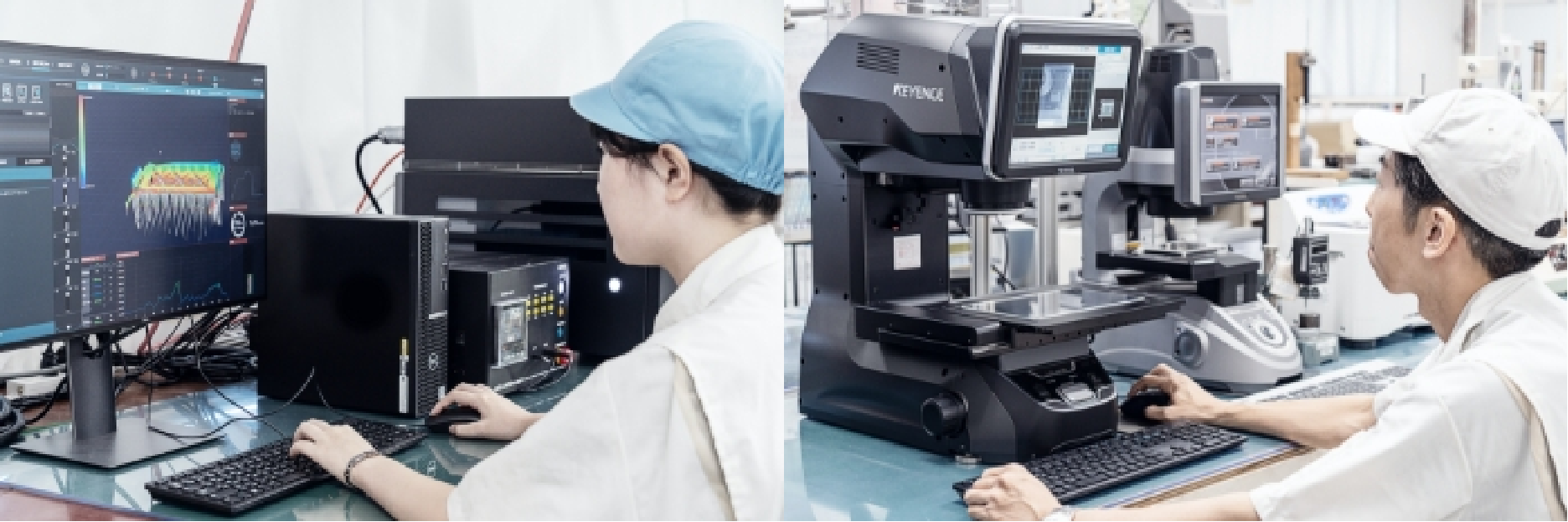
When using a reflow simulator for visual inspection and length measurement, you can record and analyze video footage capturing the thermal changes that occur the moment the solder melts. Furthermore, by using the dedicated "coreAnalyzer" software, you can analyze changes during the heating process by integrating three types of data—visual imagery, temperature readings, and measurement values—thereby gaining a precise understanding of how conditions shift at various temperatures. This enables you to significantly reduce the time required to identify the root causes of defects resulting from heating-induced changes. During heating, the resin within the connector expands, which can affect terminal coplanarity; therefore, improving coplanarity requires understanding the expansion characteristics of specific resin sections and adjusting the design and materials accordingly. Through visual inspection and measurement, you can observe overall changes in the component and quantify the extent of those changes, allowing you to quickly identify opportunities for improvement.

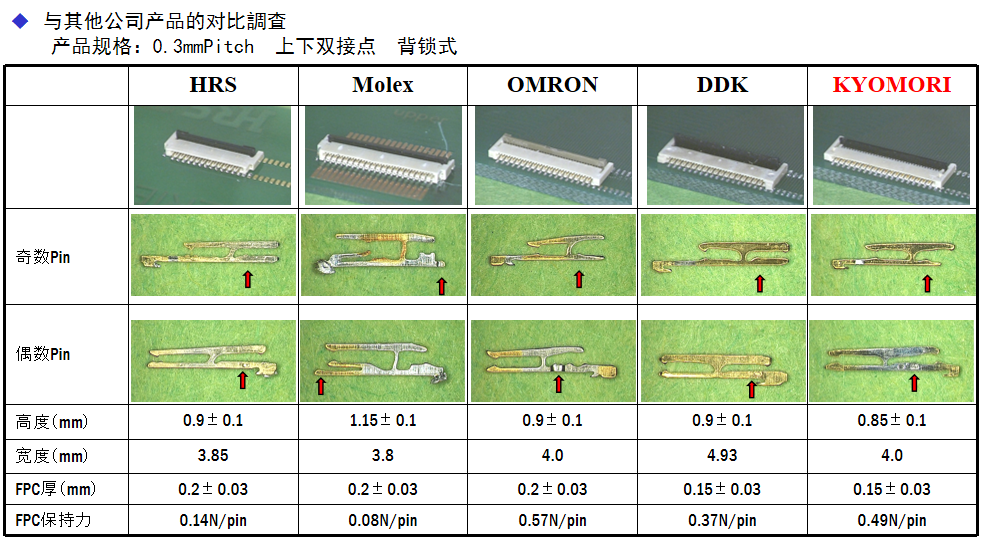
Performance comparison of Kyomori-Ka's products with those of other companies